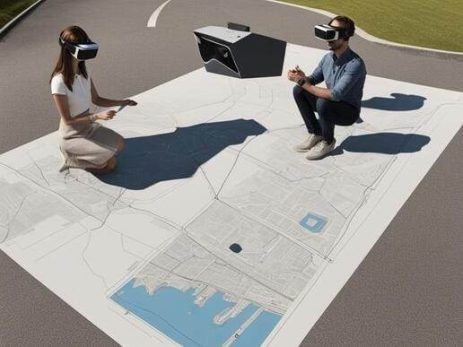
Application of Virtual Reality in Spatial Memory

It is now online the editorial: Application of Virtual Reality in Spatial Memory by Cimadevilla Jose M., Raffaella Nori and Laura Piccardi, published in Brain Sciences, an open access accessible to readers anywhere in the world.

The Editorial sums up the articles included in the Special Issue “Application of Virtual Reality in Spatial Memory " which is devoted to gathering studies on VR and spatial memory. The Special Issue includes eight contributions covering the application of VR for both children and adults. Six studies investigate which factors affect spatial navigation in VR: two investigate these factors during developmental ages (i.e., van Dun et al., 2021; van Hoogmoed et al., 2022), and the other four focus on young adults (i.e., Bocchi et al., 2021; Tascón et al., 2021; Meneghetti and Pazzaglia, 2021; Miola et al., 2021). One study reviews the applications of radial arm maze in both virtual and real versions (i.e., Palombi et al., 2022), and the study by Zucchelli et al. (2021) shows how VR can be a proper differential diagnosis tool for mild agoraphobia disorders. The latter study highlights, through the use of VR, the presence of deficits in visuospatial working memory and navigation in people with agoraphobic-type anxiety disorders.


More from the Blog

Exploring the relationship between perceived loneliness and subjective cognitive decline in older individuals
It is now online the final published version of the Article “Exploring the relationship between perceived loneliness and subjective cognitive decline in older individuals.” by Anna Pecchinenda, Alla Yankouskaya, Maddalena Boccia, Laura Piccardi, Cecilia Guariglia, and Anna Maria Giannini published in Aging & Mental Health. In the present study we conducted a cluster analysis and […]
Where Am I? Searching for the Tangle in the Developmental Topographical Disorientation
It is now online the final published version of the Article "Where Am I? Searching for the Tangle in the Developmental Topographical Disorientation”  by Laura Piccardi, Vincenza Cofini, Massimiliano Palmiero, Paola Verde, Maddalena Boccia, Liana Palermo, ...
A visual representation of how different reasoning paths influence the judgment and attribution of intentionality in complex moral scenarios.
How Reasoning Style Influences the Attribution of Intentionality
How Reasoning Style Influences the Attribution of Intentionality A recent article published in Cognitive Processing by researchers Nicola Matteucci Armandi Avogli Trotti, Micaela Maria Zucchelli, Andrea Pavan, Laura Piccardi, and Raffaella Nori explores the deep connection between our reasoning style and how we attribute intentionality to others, especially in morally ambiguous situations. Link to the official article: […]
Scroll to Top