The effect of Sadness on Visual Artistic Creativity in Non-Artists

It is now online the final published version of the Article “The effect of Sadness on Visual Artistic Creativity in Non-Artists” by Massimiliano Palmero, Laura Piccardi, Marco Giancola, Raffaella Nori and Paola Guariglia published in Brain Sciences.

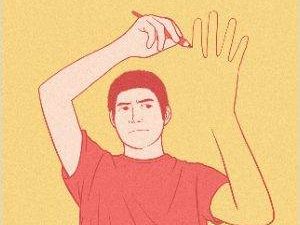
In the present study we investigated the effects of mood states on artistic creativity. Mood states were induced by instructing participants to listen to self-selected happy, sad, or neutral music for ten minutes. Then, all participants were asked to make two artistic drawings. To check for mood manipulation, the Profile of Mood States (POMS) was administered before and after listening to the self-selected music. After the mood induction, the negative group reported higher scores than the other two groups in the ‘depression’ subscale and lower scores than the other two groups in the ‘vigour’ subscale of the POMS; the positive mood group showed more vigour than the negative mood group. Yet, three independent judges assigned higher ratings of creativity and emotionality to the drawings produced by participants in the negative mood group than drawings produced by participants in the other two groups. These results confirmed that specific negative mood states (e.g., sadness) positively affect artistic creativity, probably because participants are more likely to engage in mood-repairing. Limitations and future research directions are presented.


More from the Blog

A person displaying signs of problematic smartphone use and social media addiction due to vulnerable personality traits.
The Vulnerable Side of Tech Addiction: How Personality Fuels Our Digital Habits
The Vulnerable Side of Tech Addiction: How Personality Fuels Our Digital Habits We often blame the algorithms. We blame the infinite scroll, the notification chimes, and the bright screens for our inability to put our phones down. But what if the root cause isn’t just in the device, but deep within the complexities of our […]
Graph showing reduction in distress scores (SUDs, IES-R, PCL-5) for both EMDR and Posner Paradigm groups.
EMDR and Posner Paradigm: Innovative Approaches to Reprocessing Negative Memories
EMDR and Posner Paradigm: Innovative Approaches to Reprocessing Negative Memories New research published in Frontiers in Psychiatry explores how the Posner Paradigm compares to traditional EMDR eye movements in processing distress memories. By Laura Piccardi, Samuele Russo, Stefano Lasaponara, Maddalena Boccia, Chiara Riso, Emanuela Tizzani, Jessica Burrai, Anna Maria Giannini, and Paola Guariglia. Eye Movement Desensitization and […]
Examining cognitive determinants of planning future routine events: a pilot study in school-age Italian children
It is now online the published version of the Article “Examining cognitive determinants of planning future routine events: a pilot study in school-age Italian children (Análisis de los determinantes cognitivos de la planificación de eventos de rutina futuros: un estudio piloto con niños italianos en edad e” by Marco Giancola, Alessia Bocchi, Massimiliano Palmiero, Ilaria […]
Scroll to Top