Mind’s eye in the Alzheimer’s disease spectrum continuum

It is now online the article: “Mind’s eye in the Alzheimer’s disease spectrum continuum” by Giulia Bechi Gabrielli, Fabrizia D’Antonio, Antonella Di Vita, Roberta Margiotta, Massimiliano Panigutti, Maddalena Boccia, Laura Piccardi, Liana Palermo, Emanuela Salati, Micaela Sepe Monti, Giuseppina Talarico, Giuseppe Bruno and Cecilia Guariglia, published in Journal of Alzheimer’s Disease.

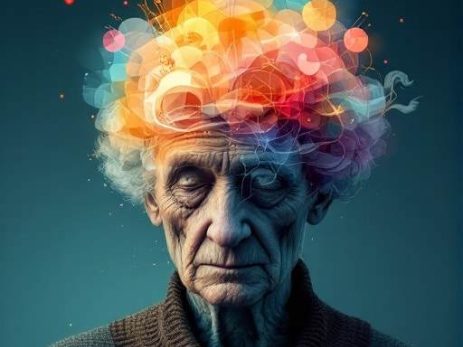
This article aims to investigate visual mental imagery (VMI) ability in mild AD and MCI patients, hypothesizing that VMI ability could be compromised since early disease stage. For this purpose, 14 patients with mild AD, 19 amnestic MCI (aMCI), and 23 healthy control subjects (HC), matched for sex, age, and education were enrolled. VMI assessment included: 1) the O’clock test that allows disentangling the possible role of visuo-perceptual difficulties in the VMI task’s performance; 2) a modified version of The Complet Visual Mental Imagery Battery (CVMIB), including tasks evaluating the different VMI processes (generation, maintenance, inspection and transformation). Results indicated that AD patients performed worse than HC in both perceptual and imaginal tasks of the O’clock test and in all CVMIB’s tasks but maintenance. On the contrary, aMCI patients showed difficulties in the generation process and in the imaginal task of the O’clock test. Conclusions: Visual images generation, inspection and transformation processes are impaired in mild AD. Moreover, the generation process is selectively impaired in aMCI patients, suggesting that VMI deficits are already present in the prodromal stage of AD.


More from the Blog

A visual representation of moral judgment and the cognitive pathways of reasoning in side-effect intentionality attribution.
How does reasoning influence intentionality attribution in the case of side effects?
How does reasoning influence intentionality attribution in the case of side effects? To evaluate others’ actions objectively, one must integrate the actor’s mental states with the potential consequences of their actions. However, consequences can often distort our perception of intentionality. A well-known phenomenon in cognitive science, the Knobe effect (or “side-effect effect”), demonstrates that individuals tend to […]
Effects of Physical Exercise on Brain and Cognitive Functioning
It is now online the Effects of Physical Exercise on Brain and Cognitive Functioning by Soledad Ballesteros, Laura Piccardi and  Joshua Oon Soo Goh, published in Frontiers  in Human Neuroscience, section Cognitive Neuroscience. It is an open access public...
Italian medical professionals reviewing AI-generated diagnostic recommendations on a digital tablet.
Italian Physicians and AI: Knowledge, Attitudes, and Diagnostic Concordance
Study Overview and Objective Now available online: the article "Medical Clinical Minds Meet Artificial Intelligence: Italian Physicians; Knowledge, Attitudes, and Concordance Between Italian Physicians and AI-Generated Diagnoses. A National Cross-Sectional Study" by Vincenza Cofini, Mario Muselli, Laura Piccardi, Eugenio Benvenuti, Ginevra Di Pangrazio, Martina Mancinelli, Eleonora Cimino, Patrizia Palermo, Emiliano Petrucci, Giovanna Picchi, Loreta Tobia, […]
Scroll to Top