Relationship Between Depression and Neurodegeneration: Risk Factor, Prodrome, Consequence, or Something Else? A Scoping Review

It is now online the review: Relationship Between Depression and Neurodegeneration: Risk Factor, Prodrome, Consequence, or Something Else? A Scoping Review by Dario Papa, Alessandro Ingenito, Alessandro von Gal, Maria Francesca De Pandis, and Laura Piccardi, published in Biomedicine.

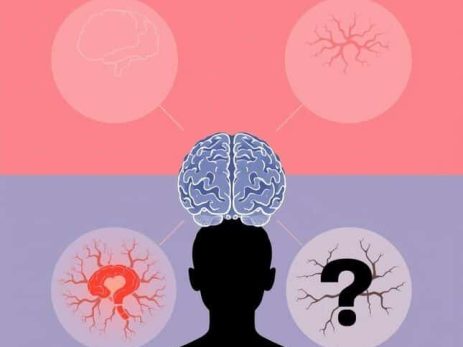
This article seeks to investigate the unclear link between depression and neurodegeneration. A huge debate exists whether depression is a risk factor, a prodrome, a consequence, or unrelated. This review examines these possibilities to clarify their connection, focusing primarily on Alzheimer’s disease, vascular dementia, Parkinson’s disease, and other highly comorbid neurodegenerative diseases. The studies included in this review focused on neurodegenerative diseases with high comorbidity with depression, published in peer-reviewed English-language journals, providing empirical evidence on the link between the two conditions or theoretical frameworks that point to other studies. Non-human studies and those irrelevant to this connection were excluded. Source of evidence: AI-supported tools identified relevant articles. Most studies suggest depression may contribute to neurodegeneration, but clinical, neuroimaging, and longitudinal evidence also support its role as a prodrome or consequence, indicating a bidirectional relationship. Despite extensive research, the connection remains unclear, highlighting the need for further investigation into underlying mechanisms and interdependencies, focusing on longitudinal studies by examining causality.

Relationship Between Depression and Neurodegeneration: Risk Factor, Prodrome, Consequence, or Something Else? A Scoping Review: https://www.mdpi.com/2227-9059/13/5/1023

More from the Blog

Betting on Your Feelings: The Interplay between Emotion and Cognition in Gambling Affective Task
It is now online the article: Betting on Your Feelings: The Interplay between Emotion and Cognition in Gambling Affective Task by Emanuela Mari, Clarissa Cricenti, Maddalena Boccia, Micaela Maria Zucchelli, Raffaella Nori, Laura Piccardi, Anna Maria Giannini and Alessandro Quaglieri in Journal of Clinical Medicine. The aim of this study is to explore differences in […]
Mind’s eye in the Alzheimer’s disease spectrum continuum
It is now online the article: “Mind’s eye in the Alzheimer’s disease spectrum continuum” by Giulia Bechi Gabrielli, Fabrizia D’Antonio, Antonella Di Vita, Roberta Margiotta, Massimiliano Panigutti, Maddalena Boccia, Laura Piccardi, Liana Palermo, Emanuela Salati, Micaela Sepe Monti, Giuseppina Talarico, Giuseppe Bruno and Cecilia Guariglia, published in Journal of Alzheimer’s Disease. This article aims to […]
A visual representation of moral judgment and the cognitive pathways of reasoning in side-effect intentionality attribution.
How does reasoning influence intentionality attribution in the case of side effects?
How does reasoning influence intentionality attribution in the case of side effects? To evaluate others’ actions objectively, one must integrate the actor’s mental states with the potential consequences of their actions. However, consequences can often distort our perception of intentionality. A well-known phenomenon in cognitive science, the Knobe effect (or “side-effect effect”), demonstrates that individuals tend to […]
Scroll to Top