
Investigating Flight Safety and Visual Illusions in the Italian Aviation Context
A significant new study has been released in the journal Aerospace Medicine and Human Performance, shedding light on the physiological challenges pilots face during night operations. The research article, titled The Black Hole Approach and The Italian Experience, was authored by Luigi Cacciapuoti, Laura Piccardi, Marcello Paolillo, Matilde Grieco, Mariagrazia Vittorini, and Paola Verde.
This comprehensive research investigates Black Hole Approach spatial disorientation during flight, with a specific focus on low-visibility conditions such as nocturnal operations or adverse weather scenarios. The study highlights how visual illusions, often exacerbated by the lack of external references, can mislead pilots into making incorrect judgments regarding aircraft orientation, which can lead to catastrophic consequences.
Visual Illusions and Perrone’s Theory
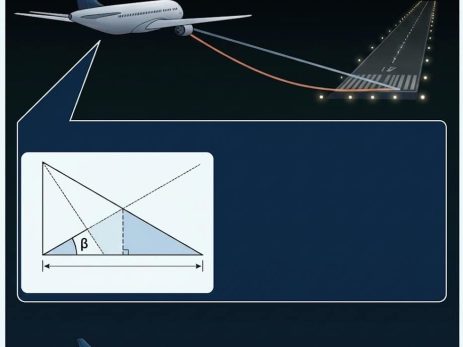
The core of the research revolves around Perrone’s black hole approach theory. This theory describes how the loss of lateral visual references distorts the perceived approach angles during landing. When a pilot lacks a visible horizon or ground cues, they may misperceive the "slant," leading to a dangerously low glide path.
Specifically, the study utilizes Perrone’s visual slant misperception formula to calculate apparent glide path angles. By applying this systematic assessment, the authors aimed to quantify the inherent risks pilots face when approaching runways in "black hole" conditions.
Assessing Risk Across 119 Italian Airports
The research team conducted a massive evaluation of 119 Italian civil and military airports. Based on the calculated risk of Black Hole Approach spatial disorientation, the airports were categorized into four distinct risk levels:
-
Low Risk: 2–4°
-
Moderate Risk: 4–6°
-
Medium Risk: 6–8°
-
High Risk: >8°
The analysis revealed that nine airports (7.6% of the total) presented medium to high risk, with descent angles ≥6°. Interestingly, these specific locations lacked Precision Approach Path Indicator (PAPI) systems as of February 2025.
Infrastructure and Operational Limitations
One of the most intriguing findings was that none of the high-risk airports identified were authorized for nighttime operations. This suggests that the primary conditions for a "black hole approach" are currently avoided by operational restrictions.
However, this discovery raises a critical question: do these airports lack PAPI systems because night operations are not authorized, or are the operational limitations a direct result of the lack of visual aids? The results emphasize the essential role of visual aids, such as PAPI and the Instrument Landing System (ILS), in ensuring flight safety.
The Importance of Pilot Training and Standardized Protocols
The study underscores that technology alone is not the only solution. To mitigate Black Hole Approach spatial disorientation, there is a critical need for:
-
Comprehensive Pilot Training: Enhancing the ability to recognize and recover from spatial disorientation by relying on onboard instruments.
-
Advanced Guidance Systems: Implementing better visual and digital aids for landing.
-
Standardized Risk Assessment: Developing protocols that integrate an airport’s physical characteristics with its specific operational context.
Ultimately, this Italian experience serves as a vital case study for global aviation, demonstrating the need for a data-driven approach to infrastructure and safety management.