Editorial: Physical exercise and brain health: functional mediators and therapeutic targets focusing on neuroendocrinology

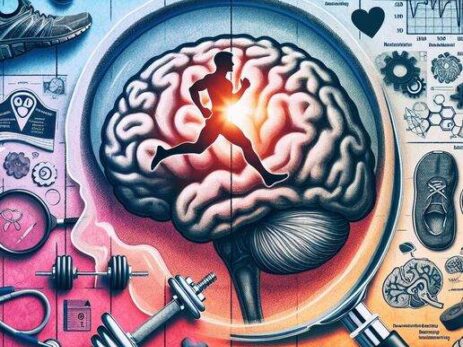
It is now online the editorial: Editorial: Physical exercise and brain health: functional mediators and therapeutic targets focusing on neuroendocrinology by Weina Liu, Laura Piccardi, Howe Liu, Li Zhang, Chengyi Liu and Jie Xia published in Frontiers in Neuroscience.

The editorial introduces a research topic that addresses neuropsychiatric disorders, particularly in the context of the increasing prevalence of metabolic diseases and brain-related conditions; the significance of physical exercise as a valuable adjunct becomes apparent. By exploring the intricate dynamics of this relationship, we can gain a deeper understanding of how exercise revolutionizes our strategies for mental health care. This Research Topic includes six studies focusing on enhancing comprehension of the intersection between neuroendocrinology and physical exercise within the realm of brain diseases.


More from the Blog

The contribution of being physically active to successful aging
It is now online the article: "The contribution of being physically active to successful aging" by Laura Piccardi, Anna Pecchinenda, Massimiliano Palmiero, Marco Giancola, Maddalena Boccia, Anna Maria Giannini, and Cecilia Guariglia, published in Frontiers in Human Neuroscience, section Cognitive Neuroscience. It is an open-access publication accessible to readers anywhere in the world. It is […]
Disruptive resting state networks characterizing depressive comorbidity in Alzheimer’s disease and mild cognitive impairment
It is now online ALE-meta-analysis: Disruptive resting state networks characterizing depressive comorbidity in Alzheimer's disease and mild cognitive impairment by Alessandro von Gal, Dario Papa, Marco D’Auria, and Laura Piccardi, published in Journal of Alzheimer’s Disease. This systematic literature review on Scopus, PubMed, and Web of Science extracts experiments that compare resting state scans of […]
Graph showing reduction in distress scores (SUDs, IES-R, PCL-5) for both EMDR and Posner Paradigm groups.
EMDR and Posner Paradigm: Innovative Approaches to Reprocessing Negative Memories
EMDR and Posner Paradigm: Innovative Approaches to Reprocessing Negative Memories New research published in Frontiers in Psychiatry explores how the Posner Paradigm compares to traditional EMDR eye movements in processing distress memories. By Laura Piccardi, Samuele Russo, Stefano Lasaponara, Maddalena Boccia, Chiara Riso, Emanuela Tizzani, Jessica Burrai, Anna Maria Giannini, and Paola Guariglia. Eye Movement Desensitization and […]
Scroll to Top