
Comparing Immersive and Non-Immersive VR: Effects on Spatial Learning and Aesthetic Experience in Museum Settings
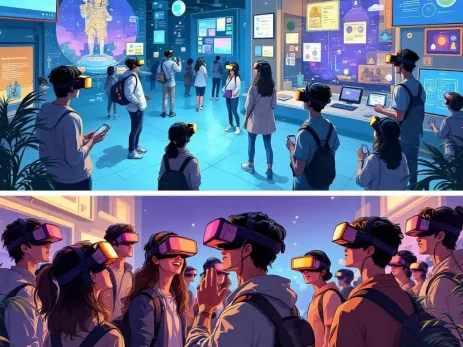
A recent article published in Brain Sciences "Comparing Immersive and Non-Immersive VR: Effects on Spatial Learning and Aesthetic Experience in Museum Settings" by Laura Piccardi, Marcello Massidda, Laura Travaglini, Sofia Pescarin, Marco Giancola, Massimiliano Palmiero, Matteo Deflorian, Sabrina Apollaro, Roberta Lista, and Raffaella Nori explores the use of virtual reality (VR) in museum environments. This study focuses on how different levels of immersion, specifically comparing Head-Mounted Display (HMD) VR with non-immersive desktop VR, affect visitors' spatial learning and aesthetic experience. The research provides valuable data for fostering appreciation and promoting the preservation of cultural heritage.
How Does Immersive VR Compare to Non-Immersive VR in a Museum Context?
The study analyzed 87 college students, who were randomly placed in either an immersive VR environment using a Head-Mounted Display (HMD) or a non-immersive VR setting. The main objective was to see how these different technologies influenced the ability to learn the virtual environment and the perception of the experience. The findings showed a clear preference for the HMD setup, which provided a more powerful sense of immersion, was rated as more pleasant, and increased the participants' willingness to repeat a similar museum experience.
Implications for Cultural Heritage and Museums
The conclusions drawn by the authors are highly relevant for the promotion and preservation of cultural heritage. Understanding that immersive VR leads to a more positive and engaging experience can help museums design more effective virtual exhibitions. The preference for HMD technology suggests that its adoption could lead to a greater appreciation of art and history, thereby fostering public interest in conservation efforts.
Methodology Used in the Research
A controlled study was conducted with 87 university students (including 46 females). Participants were randomly assigned to one of two conditions: an immersive museum experience via an HMD or a non-immersive one on a desktop computer. Afterwards, they answered questionnaires designed to measure their sense of immersion, how pleasant they found the experience, and their interest in future, similar activities.