

On the Road Safety: Gender Differences in Risk-Taking Driving Behaviors Among Seniors Aged 65 and Older
1 min read
 AI-generated
It is now online the article:
by Pierluigi Cordellieri, Laura Piccardi, Marco
Giancola, Anna Maria Giannini, and Raffaella Nori, published in Geriatrics.
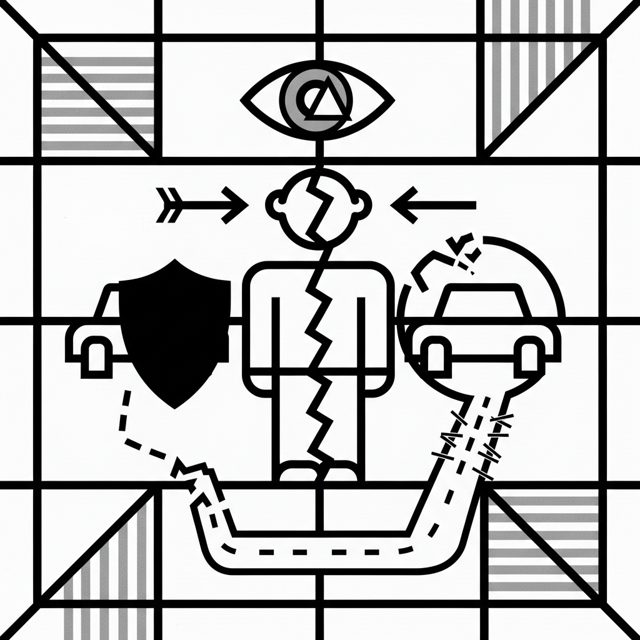
This article aims to fill the gap in evidence regarding the role of gender in risk-taking
among individuals over 65. The current study aims to investigate the relationship between
gender and risk propensity in this particular age group. The primary goal was to determine
if driving experience affects the gender gap in risk attitude. We studied risk behavior in
both car drivers and pedestrians. Our sample included 200 individuals (101 women), all
over 65, with the exact weekly driving times. After a brief demographic and anamnestic
interview, they completed the Driver Road Risk Perception Scale (DRPS) and the
Pedestrian Behavior Appropriateness Perception Scale (PBAS) questionnaires. They also
provided information about traffic violations and road crashes. Our research revealed that
older male drivers continue to tend to risky behavior, highlighting the need for targeted
interventions to improve risk awareness, especially among older men. Our findings
suggest that road safety messages should specifically target male drivers as they are less
likely to view responsible driving actions, such as observing speed limits, as desirable.
More from the blog
 AI-generated
Intentional Versus Incidental Encoding of Emotional and Navigational Memory: The Brain Sciences Study
The article “ Intentional Versus Incidental Encoding of Emotional and Navigational Memory: Preliminary Data in Healthy Young Adults”, by Andrea Di…
Read more → AI-generated
Ethical Relativism Mediates the Association Between Openness to Experience and Negative Creativity: How Morality Shapes Creative Thinking
Creativity is traditionally viewed as a valuable resource for human evolution and innovation. However, not all brilliant ideas yield favorable outcomes…
Read more → AI-generated
How Misinformation Reshapes Our Navigational Memory and Cognitive Maps
Human memory is notoriously susceptible to suggestion, a phenomenon widely documented in eyewitness testimony. However, a groundbreaking new study…
Read more →