
 AI-generated
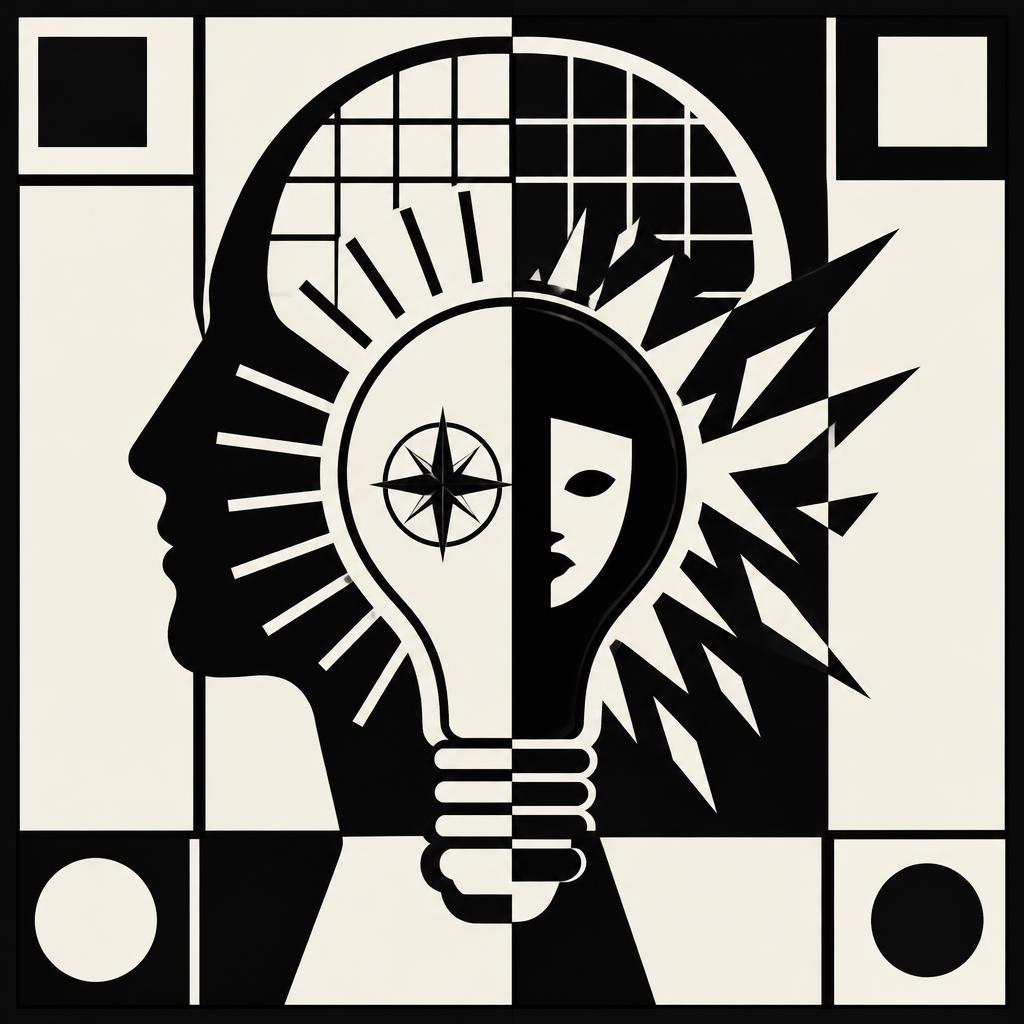
Creativity is usually praised for producing ideas that are original and effective. Yet originality and effectiveness say nothing about whether a creative outcome helps or harms. The same resources that drive innovation, wellbeing and cultural growth can also be used to deceive, manipulate or hurt others.
A new editorial, “Personality traits and the dual nature of creativity: bright and dark sides explored”, by Marco Giancola, Laura Piccardi, Maria Kozhevnikov and Massimiliano Palmiero, has just been published in Frontiers in Psychology. It introduces the Research Topic of the same name, edited by the authors.
The Research: Nine Perspectives on Creativity
The Research Topic gathers nine contributions: seven original studies, one systematic review and one theoretical article. Together, they explore how personality traits, cognitive styles, motivation and social context relate to both the constructive and the harmful sides of creative thinking. The studies range from academic staff and employees to university students and civilians engaged in deception-planning tasks.
Key Findings: One Creativity, Two Directions
Personality supports bright creativity. Openness, agreeableness and conscientiousness were linked to creativity at work. A systematic review of 82 studies identified openness, intrinsic motivation, creative process engagement and creative self-efficacy as key correlates of workplace creative performance.
Diversity helps, but emotions matter. When partners with different personality profiles worked together, they performed better on divergent thinking. The advantage weakened when their voices were altered to convey emotion.
Dark traits are not only dark. Narcissism was associated with higher creativity through creative self-efficacy, but only when employees were surrounded by creative co-workers.
Malevolent creativity has many roots. Social comparison, malicious envy, antagonistic traits and the Dark Tetrad were all associated with malevolent creativity. However, a disposition to cause harm did not necessarily make harmful ideas more original. Greater field independence, a cognitive style, was associated with creative performance but not with everyday malevolent tendencies.
Context and intentions are decisive. Creative deception is not malevolent in itself: its ethical value depends on goals, emotions and the social environment.
Implications and Future Directions
The editors argue that bright and dark creativity should be studied within a common theoretical framework, rather than as separate abilities. Creative potential does not imply good intentions, and the ability to generate harmful ideas does not mean they will be acted upon. Future research should integrate individual dispositions, intentions, motivation and context to understand how similar creative resources can be directed toward different ends.
Explore more from the lab in Our Research and Publications.
More from the blog
 AI-generated
Aeronautical Expertise as a Cognitive Reserve in Aging
Aeronautical expertise and cognitive reserve: a study of 142 men aged 20–85 finds pilots show flatter aging curves and no decline breakpoints.
Read more → AI-generated
GEB-18: A Refined Pro-Environmental Attitudes Scale
Pro-environmental attitudes, measured better: the GEB-18, a shorter Italian scale published in Current Psychology, beats the 26-item version on reliability.
Read more → AI-generated
Internet Gaming Disorder: Dark Personality Traits
Internet Gaming Disorder and dark personality traits: a study of 551 adult gamers explores five profiles and associations with problematic gaming.
Read more →