

 AI-generated
Climate change, biodiversity loss and environmental degradation are tied to human behavior. To understand and encourage pro-environmental action, researchers first need reliable ways to measure it. A new study, “Refining pro-environmental attitude measurement: psychometric properties and dimensionality of the Italian General Ecological Behavior scale” by Alessandro von Gal, Andrea Zagaria and Laura Piccardi, has just been published in Current Psychology. It offers a sharper tool for doing exactly that.
The Research: Putting the GEB Scale to the Test
The General Ecological Behavior (GEB) scale is one of the best-established questionnaires for estimating environmental attitudes. It is based on the Rasch model and the Campbell paradigm. The idea is that a person’s commitment to environmental goals shows in their willingness to engage in behaviors that become progressively more costly or demanding. The scale has been revised and adapted many times over the years, but some psychometric issues have never been fully resolved.
The authors analyzed data from 398 Italian participants with Rasch modelling. They added post-hoc exploratory analyses with polytomous and multidimensional models.
Key Findings: Less Is More
-
Prosocial items don’t fit. Including prosocial behaviors in the scale violated two core Rasch assumptions: unidimensionality and local independence.
-
A leaner, stronger scale. Removing those items gave the GEB-18, an 18-item version with better psychometric properties. Its reliability was higher than that of the original 26-item version (KR-20 = 0.70 vs 0.65).
-
Convergent evidence. Both versions were associated with climate change anxiety. The GEB-18 showed a comparable association and a slightly better relative model fit (lower AIC and BIC).
-
Room for growth. Keeping the ordinal response format improved reliability. Some multidimensionality and local dependence remained, especially among the environmental activism items, which suggests additional latent dimensions.
Implications and Future Directions
The GEB-18 gives researchers in environmental psychology a more targeted and reliable instrument for assessing pro-environmental attitudes in Italian samples. The leftover complexity in the activism items points to a clear next step: multidimensional approaches that capture the different facets of ecological engagement.
Spatial Cognition Research from Rome
Our lab studies how internal and external factors shape human cognition and behavior, and that includes how we relate to the environment around us. Explore our research page to find out more, or get in touch if you’d like to collaborate.
More from the blog
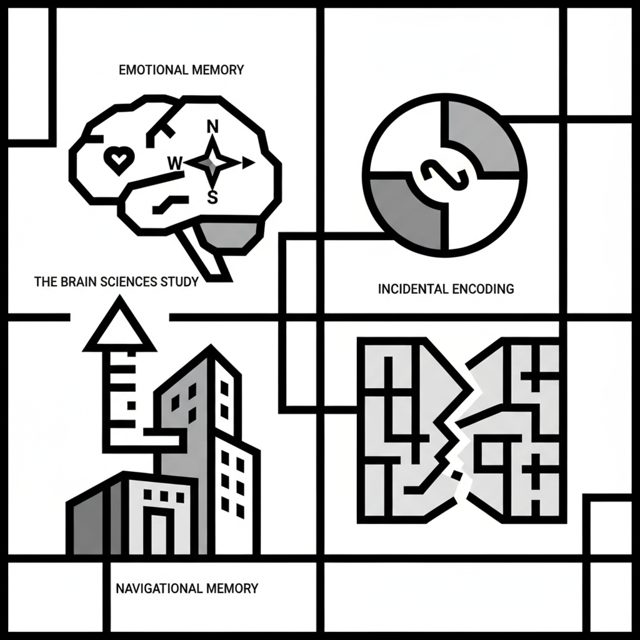 AI-generated
Intentional Versus Incidental Encoding of Emotional and Navigational Memory: The Brain Sciences Study
The article “ Intentional Versus Incidental Encoding of Emotional and Navigational Memory: Preliminary Data in Healthy Young Adults”, by Andrea Di…
Read more →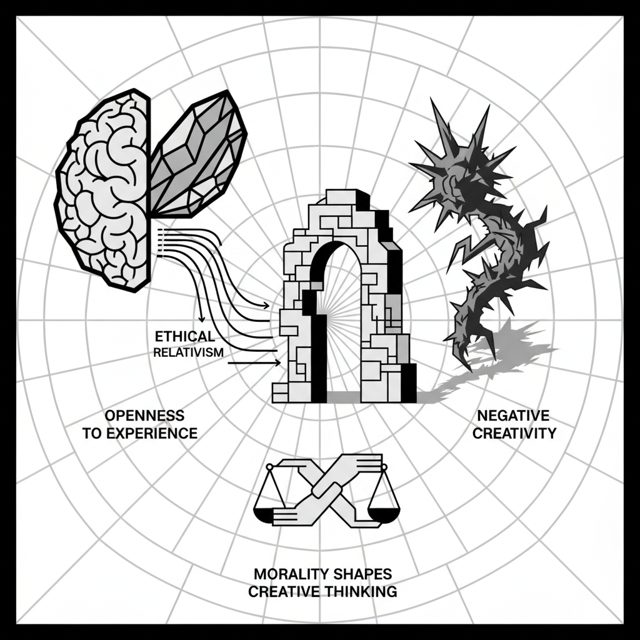 AI-generated
Ethical Relativism Mediates the Association Between Openness to Experience and Negative Creativity: How Morality Shapes Creative Thinking
Creativity is traditionally viewed as a valuable resource for human evolution and innovation. However, not all brilliant ideas yield favorable outcomes…
Read more → AI-generated
How Misinformation Reshapes Our Navigational Memory and Cognitive Maps
Human memory is notoriously susceptible to suggestion, a phenomenon widely documented in eyewitness testimony. However, a groundbreaking new study…
Read more →